Log a WOD once and keep the movement history
A WOD score tells you how the workout went. Its movement history tells you what you trained. PRzilla keeps both without asking you to duplicate the session.
In PRzilla, work recorded inside a WOD can appear in the individual movements' history. You can keep the workout's result and look back at the pull-ups, squats, or barbell work it contained without creating a second copy of the session.
That answers a different question from your best workout time. A benchmark page helps you compare attempts at the same workout. Movement history helps you find the same movement across different workouts.
The workout name should not hide the work
Cindy is a 20-minute AMRAP of five pull-ups, ten push-ups, and fifteen air squats. The round count is its headline result. The movements are the work behind that result.
If you later open Pull-Up, it is useful to see that work alongside your other pull-up sessions. You should not have to remember that it was filed under Cindy, or search every WOD name that might have included it.
PRzilla keeps workout context attached to movement history. Its movement Stats surface also distinguishes work done inside WODs from personal records for an individual movement.
You get two ways back into the same training: start from the workout to see the result, or start from the movement to see where it appeared.
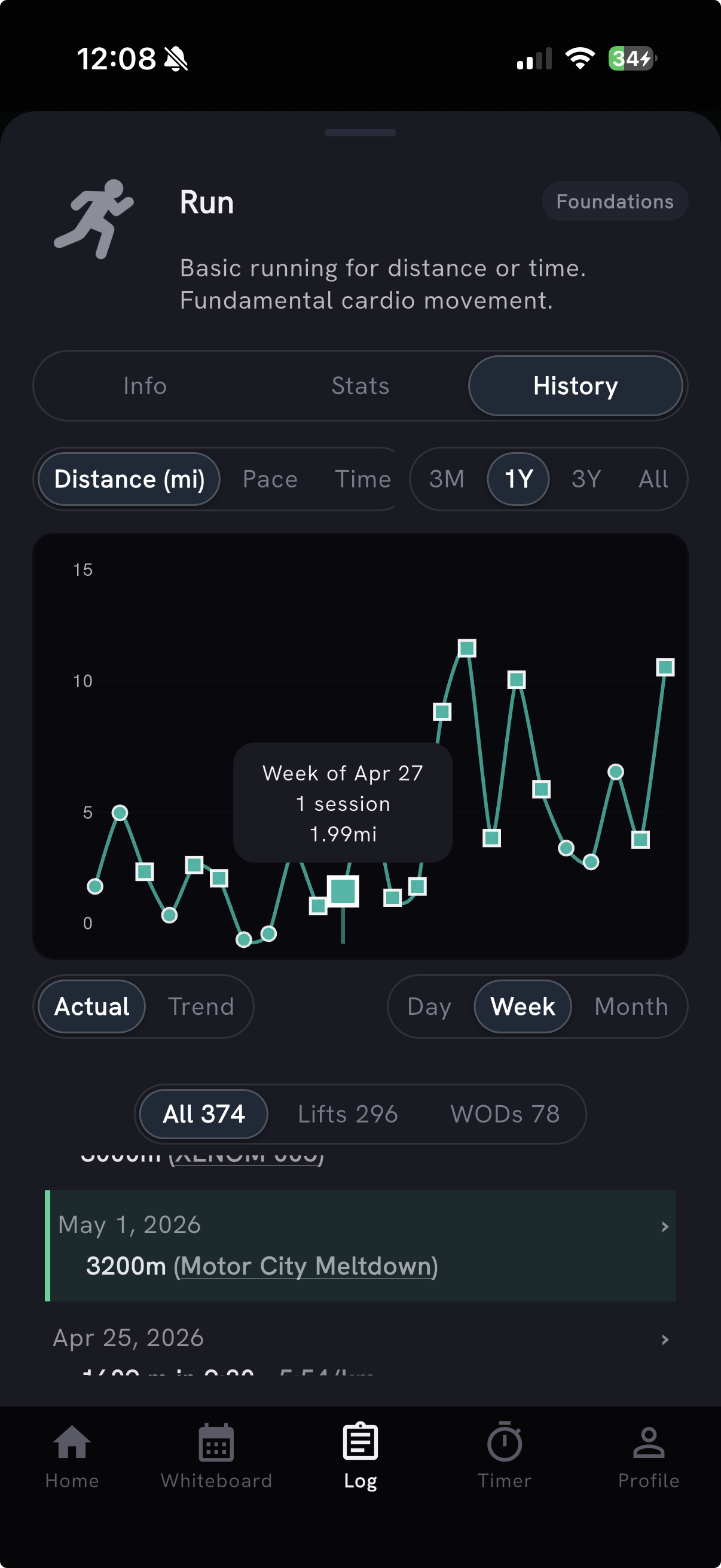
Another movement example: Run history keeps a named WOD entry alongside other running work. This capture is from the August 2 release.
The record needs the work you actually completed
The prescription describes the plan. Your log describes the result.
For a familiar benchmark completed as prescribed, the relationship can be straightforward. It becomes less straightforward when you change a movement, use a different load, stop at a time cap, or record only a total that does not explain the breakdown.
PRzilla's logger supports a headline score and movement details. Review those details when they are available, especially after scaling. A prescribed set left on the screen is not, by itself, proof that you completed it.
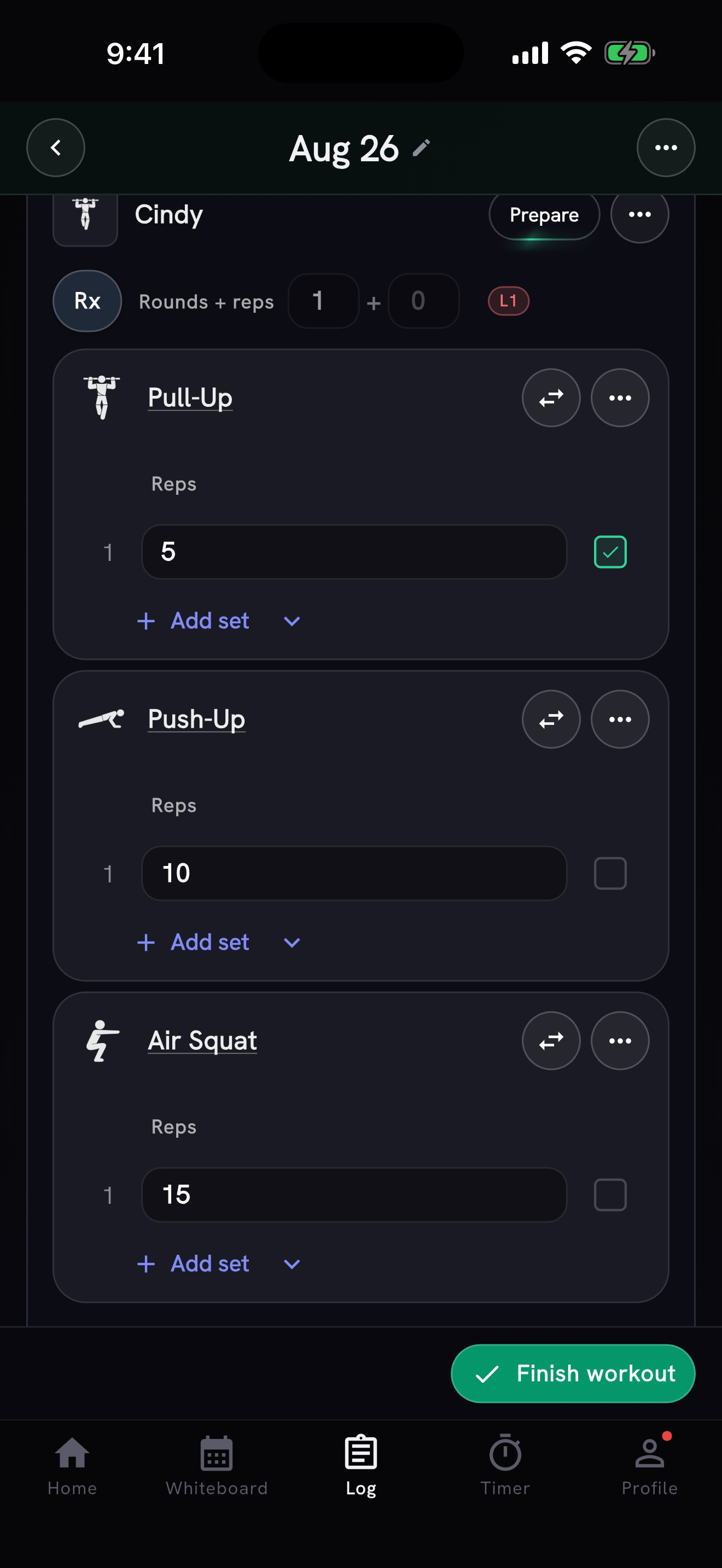
The headline score and the individual sets are visible together. In this August release capture, Pull-Up is checked; Push-Up and Air Squat remain unchecked.
Some results remain useful as a headline even when there is not enough information for a reliable movement breakdown. A missing breakdown is a reason to check the detail you recorded, not to fill the gaps with the full prescription.
That is also why capped and finished workouts score differently. Reaching the time limit does not establish that every prescribed rep happened.
Total work is useful even when it is not a PR
Movement history and total-work charts can show work spread across a session. A movement PR needs a result that supports the particular claim being made.
Pull-ups accumulated over a whole WOD do not establish your longest unbroken set. Time accumulated across several holds does not establish your longest single hold. The workout still belongs in your history.
This distinction lets the log answer both "When did I train this?" and "What is my best recorded effort?" without turning one answer into the other. The same principle protects one-rep-max estimates from high-rep WOD totals.
On your next logged WOD, open one of its movements and look at its history. You can return to the session from the movement even after you have forgotten the workout's name.